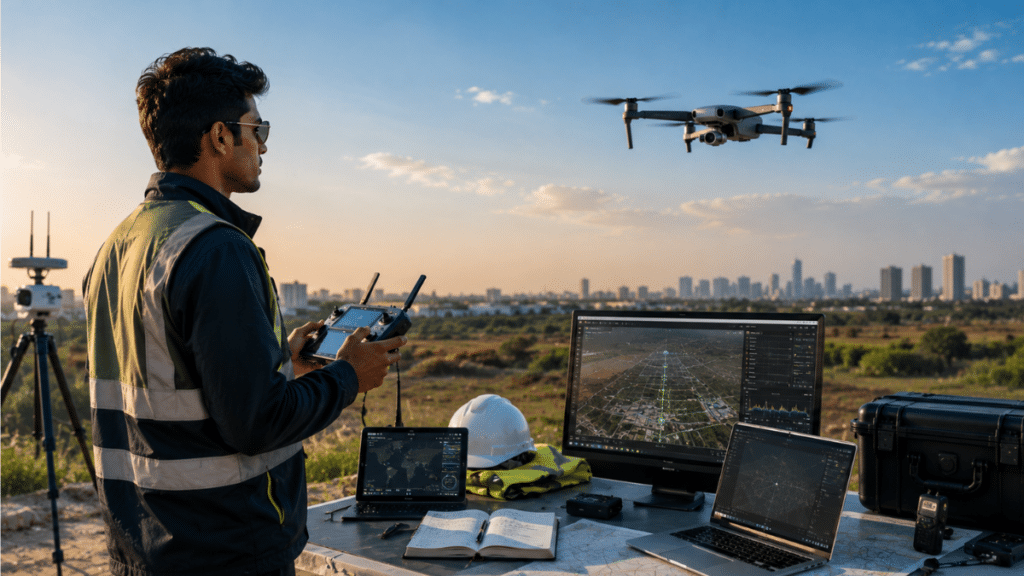
Picture this: five years ago, drone pilots were mostly hobbyists flying RC toys in their backyards. Today, they’re licensed professionals earning upwards of six figures by inspecting wind turbines, filming major Hollywood productions, and delivering critical medical supplies to remote areas. The drone industry has exploded, and there’s never been a better time to learn how to become a drone pilot.
Whether you’re a student pilot looking to expand your aviation skillset, someone exploring a career change, or simply fascinated by unmanned aircraft technology, getting certified as a drone pilot is more accessible than you might think. Unlike traditional pilot training that requires hundreds of flight hours and significant financial investment, becoming a commercial drone pilot can happen in just a few weeks. But don’t let that fool you—this career still demands solid aviation knowledge, respect for regulations, and a commitment to safety. In this guide, we’ll walk you through everything you need to know about how to become a drone pilot, from understanding FAA requirements to launching your career in this rapidly growing field.
What Does a Commercial Drone Pilot Actually Do?
Before you dive into certification, it helps to understand what drone pilots really do day-to-day. Commercial drone operations are worlds apart from flying drones recreationally in your local park. As a certified drone pilot, you’re operating unmanned aircraft systems (UAS) for business purposes, which means you’re subject to FAA regulations and professional standards.
The beauty of drone pilot certification is the sheer variety of industries that need your skills. Real estate agents hire drone pilots to capture stunning aerial footage of properties. Construction companies use drones to survey job sites and monitor progress. Agricultural businesses rely on drone technology to assess crop health and optimize irrigation. Insurance adjusters use drones to inspect roof damage without climbing ladders. Film production companies, environmental researchers, emergency responders, and infrastructure inspection teams all need skilled pilots.
Your typical day might involve planning flight missions, checking weather conditions, ensuring your equipment is airworthy, navigating complex airspace restrictions, capturing specific footage or data, and maintaining detailed flight logs. If you’ve got any background in traditional aviation, you’ll find that many fundamental principles still apply—weather theory, airspace classifications, and crew resource management all matter, even when you’re flying from the ground.
Understanding the FAA Part 107 License
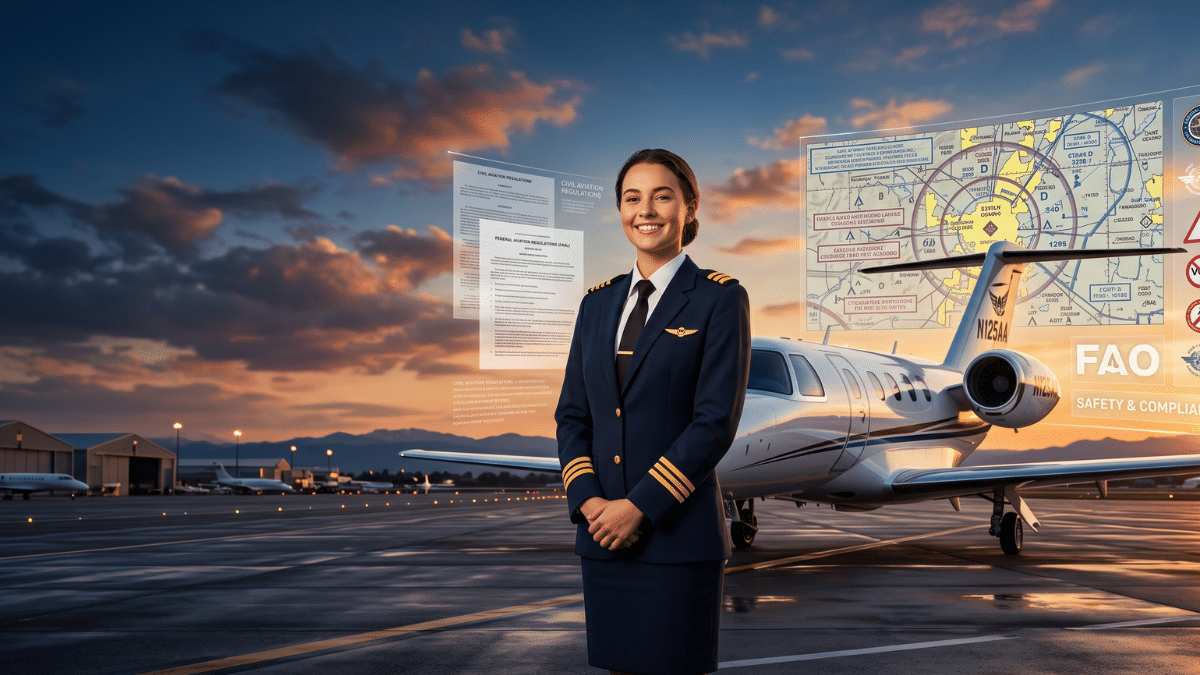
Here’s where things get official. If you want to fly drones commercially in the United States, you need an FAA Part 107 Remote Pilot Certificate. This isn’t optional—it’s federal law. The Part 107 regulation distinguishes between recreational flyers (who follow different rules) and commercial operators like you.
To qualify for your Part 107 certificate, you must be at least 16 years old, pass a TSA security background check, and demonstrate aeronautical knowledge by passing the FAA’s knowledge test. The good news? Unlike traditional pilot certificates, you don’t need a medical exam. You simply need to be physically and mentally fit enough to safely operate a drone.
Your Part 107 certificate comes with specific privileges and limitations. You can fly drones weighing less than 55 pounds during daylight hours (or civil twilight with proper anti-collision lighting). You must keep your drone within visual line of sight, fly below 400 feet in most airspace, and stay clear of people not directly involved in your operation. These rules exist for good reasons—they keep our national airspace safe for everyone.
One thing many new pilots don’t realize: your certificate is valid for 24 months. After that, you’ll need to complete recurrent training to maintain your privileges. Think of it like staying current in any aviation role—regulations change, technology evolves, and staying sharp matters.
Step-by-Step: How to Become a Drone Pilot
Ready to get certified? Here’s your roadmap.
Step 1: Assess Your Goals and Eligibility
First, make sure this is the right move for you. Are you planning to fly drones as a side business, or do you want to build a full-time career? Understanding your goals helps you plan your training and equipment investments. Confirm you meet the basic requirements: you’re at least 16, you can read and speak English, and you’re prepared to study aviation concepts.
Step 2: Study for the Part 107 Knowledge Test
This is where the real work begins. The Part 107 exam covers regulations, airspace classification, weather theory, aircraft loading and performance, emergency procedures, and more. Most people need 20 to 30 hours of study time to feel confident. The FAA provides free study materials, but many aspiring pilots benefit from structured courses that break down complex topics into digestible lessons.
Step 3: Schedule and Pass the Knowledge Test
Once you’re ready, schedule your exam at an FAA-approved testing center (usually operated by PSI). The test consists of 60 multiple-choice questions, and you’ll have two hours to complete it. You need a score of 70% or higher to pass. Bring a valid photo ID, and don’t stress too much—most people who study properly pass on their first attempt.
Step 4: Complete Your FAA Application
After passing the test, you’ll register with the FAA’s Integrated Airman Certification and Rating Application (IACRA) system. This triggers your TSA background check. The entire process usually takes a few weeks, though it can vary based on current processing times.
Step 5: Receive Your Remote Pilot Certificate
Congratulations! Once approved, you’ll get access to your digital certificate immediately, and the FAA will mail you a physical card. You’re now legally authorized to fly drones commercially anywhere in the United States.
What’s Actually on the Part 107 Exam?
Let’s talk about what you’re up against. The Part 107 knowledge test isn’t a walk in the park, but it’s definitely manageable if you prepare properly. You’ll face questions across several core knowledge areas.
Regulations and operating requirements make up a significant portion. You need to know when you can fly, where you can fly, and what rules govern commercial drone operations. Airspace classification is huge—understanding the difference between Class B, C, D, E, and G airspace, and knowing when you need special authorization, is critical.
Weather theory comes up frequently. You should understand how wind, temperature, density altitude, and atmospheric conditions affect your drone’s performance. Questions about reading METARs (weather reports) and TAFs (forecasts) appear regularly.
You’ll also see questions on aircraft loading and performance, emergency procedures, crew resource management, and even basic radio communication procedures. Some questions involve charts and diagrams, so practice interpreting sectional charts and weather graphics during your studies.
The good news? You don’t need aviation experience to understand this material. The concepts are taught assuming you’re starting from zero. Put in the study time, use practice exams to identify weak areas, and you’ll do fine.
Training Options: Self-Study vs. Structured Programs
How you prepare for the Part 107 exam is entirely up to you, and there’s no single “right” way to learn how to become a drone pilot.
The Self-Study Route
If you’re disciplined and enjoy independent learning, self-study can work well. The FAA offers free study guides and resources on their website. YouTube has countless tutorial videos. Online forums and Reddit communities provide support and answer questions. The main challenge? Staying motivated and ensuring you’re covering everything thoroughly. Self-study works best if you already have some aviation background or if you’re particularly good at teaching yourself technical material.
Structured Training Programs
Many aspiring drone pilots prefer formal training courses. These programs (available both online and in-person) provide structured curriculum, practice exams, instructor support, and a clear path from beginner to test-ready. At Pilots Academy, we’ve seen firsthand how structured training helps students build confidence and pass their exams on the first try. Having an experienced instructor to clarify confusing concepts and answer your specific questions makes a real difference.
One often-overlooked aspect of training: actual flight practice. Here’s the thing—the Part 107 exam tests your knowledge, but it doesn’t require you to demonstrate practical flying skills. However, we strongly recommend getting hands-on experience with a drone before you start flying commercially. Understanding how drones handle in different wind conditions, practicing smooth camera movements, and building muscle memory with the controls will make you a far more capable professional pilot.
The Real Costs: What You’ll Actually Spend
Let’s talk money. Becoming a drone pilot requires investment, but it’s remarkably affordable compared to traditional pilot training.
The Part 107 knowledge test costs $175. If you choose a structured training course, expect to spend anywhere from $150 to $300, though free resources exist if you’re budget-conscious. Then there’s equipment—entry-level drones suitable for commercial work start around $500, but professional-grade systems can run $1,500 to $5,000 or more depending on your intended use.
Don’t forget insurance. If you’re flying commercially, liability insurance is essential. Policies typically cost $500 to $1,500 annually depending on coverage levels. You’ll also need to budget for recurrent training every 24 months to maintain your certificate, which typically costs $50 to $150.
All in, expect to invest roughly $1,000 to $2,500 to get certified and properly equipped for entry-level commercial work. Compare that to the $50,000 to $100,000 needed for a traditional private pilot certificate, and you’ll see why so many people are drawn to drone pilot careers.
The return on investment can be impressive. Entry-level drone pilots charge $35 to $75 per hour. With experience and specialization, rates jump to $100 to $300 per hour or more. Many pilots recoup their initial investment within their first month of commercial work.
Career Opportunities: Where Drone Pilots Are in Demand
The job market for certified drone pilots is genuinely exciting right now. Nearly every industry you can imagine has found ways to use drone technology, and they need skilled pilots to operate safely and legally.
Real estate and property marketing represent one of the largest markets for drone services. Agents need compelling aerial photos and videos to showcase listings, and they’re willing to pay well for quality work. Agricultural drone pilots use specialized sensors to monitor crop health, identify irrigation issues, and optimize farming operations—precision agriculture is a billion-dollar industry.
Construction and engineering firms hire drone pilots for site surveys, progress documentation, and safety inspections. This work is steady, well-paid, and often leads to long-term contracts. Film and media production offers creative opportunities and potentially high earnings, though competition can be fierce in major markets.
Infrastructure inspection is another booming sector. Power companies need pilots to inspect transmission lines. Telecom companies need cell tower inspections. Transportation departments need bridge inspections. This work often pays premium rates because it requires special skills and reduces dangerous manual inspection work.
Emergency services and public safety agencies increasingly use drones for search and rescue, accident reconstruction, and disaster assessment. Environmental research organizations employ drone pilots for wildlife monitoring, habitat mapping, and climate studies.
Your employment options are equally varied. You can work full-time for a company, building expertise in their specific application. You can freelance, taking on projects across different industries and controlling your schedule. Or you can start your own drone services business, building a client base and potentially hiring other pilots as you grow.
Building Your Drone Career After Certification
Getting your Part 107 certificate is just the beginning. The most successful drone pilots treat their certification as a foundation and continuously build their skills and business.
Start by gaining practical flight experience. Fly in different conditions, practice precision maneuvers, and get comfortable with your equipment. Build a portfolio showcasing your best work—before and after shots, sample videos, and examples of the services you offer. Your portfolio is your calling card when approaching potential clients.
Marketing matters more than most new pilots expect. Create a professional website, maintain active social media profiles, and network within industries you want to serve. Join local business groups, attend real estate meetings, or connect with construction professionals. Word-of-mouth referrals drive much of the drone services business.
Understand that some operations require special FAA waivers. Want to fly at night? Over people? Beyond visual line of sight? These scenarios require additional authorization. Learning how to apply for and obtain waivers opens up higher-paying opportunities.
Consider specializing in a niche market. Becoming the go-to drone pilot for a specific industry—like solar panel inspections or wedding videography—often leads to more consistent work and premium pricing. Continuing education matters too. Thermal imaging, photogrammetry, and advanced data processing skills can significantly increase your value.
Professional organizations like the Association for Unmanned Vehicle Systems International (AUVSI) and the Professional Drone Pilots Association offer networking, resources, and continuing education opportunities. Membership can pay for itself through the connections you make.
Your Path Forward Starts Here
Learning how to become a drone pilot opens doors to one of aviation’s most dynamic and accessible career paths. Unlike traditional pilot training that requires years of commitment, you can be certified and flying commercially within weeks. The investment is reasonable, the career opportunities are diverse, and the industry continues to grow year after year.
At Pilots Academy, we’ve helped hundreds of aspiring pilots achieve their aviation goals, from traditional flight training to specialized certifications like Part 107. We understand that choosing where to train matters. You want instructors who genuinely care about your success, programs designed around how people actually learn, and a supportive community that celebrates your achievements.
Whether you’re adding drone certification to complement your existing aviation career or you’re taking your first steps into the world of flight, we’re here to guide you. Our experienced instructors break down complex concepts into understandable lessons. Our training programs prepare you not just to pass the exam, but to succeed as a professional pilot. And our community of students and graduates provides networking opportunities and ongoing support as you build your career.
The sky truly is the limit when you’re a certified drone pilot. The technology continues to evolve, new applications emerge constantly, and demand for skilled pilots shows no signs of slowing. If you’ve been thinking about making this move, there’s no better time than right now.
Ready to take the next step? Explore our drone pilot training programs and discover how Pilots Academy can help you achieve your certification goals. Your future as a professional drone pilot is closer than you think.
Frequently Asked Questions
Q: How long does it take to become a drone pilot?
Most people complete their Part 107 certification within 2 to 4 weeks. This includes study time (20-30 hours for most people), scheduling and taking the exam, and processing time for your certificate. If you’re highly motivated and can dedicate focused study time, some people accomplish it in as little as one week.
Q: Do you need a pilot license to fly drones commercially?
No, you don’t need a traditional pilot license. The Part 107 Remote Pilot Certificate is specifically designed for drone operations and stands alone. However, if you already hold a traditional pilot certificate, you can complete simplified training rather than taking the full Part 107 exam.
Q: What happens if you fly a drone commercially without Part 107?
Flying commercially without proper certification is illegal and can result in serious consequences. The FAA can impose civil penalties up to $32,666 per violation. In egregious cases, criminal penalties are possible. Beyond legal risks, flying without certification means no insurance coverage if something goes wrong, which could leave you personally liable for damages.
Q: Can you fly drones in any weather?
Not safely or legally in many conditions. Your Part 107 certificate allows flight in certain weather conditions, but you must maintain visual line of sight with your drone and observe minimum visibility and cloud clearance requirements. High winds, rain, snow, and low visibility all create safety hazards. Responsible pilots know when weather conditions make flight inadvisable, even if it’s technically legal.
Q: How often do you need to renew your drone pilot license?
Your Part 107 certificate is valid for 24 months (two years). Before it expires, you must complete recurrent training—either an online course or retake the knowledge test—to maintain your privileges. This requirement keeps pilots updated on regulation changes and reinforces critical safety knowledge.