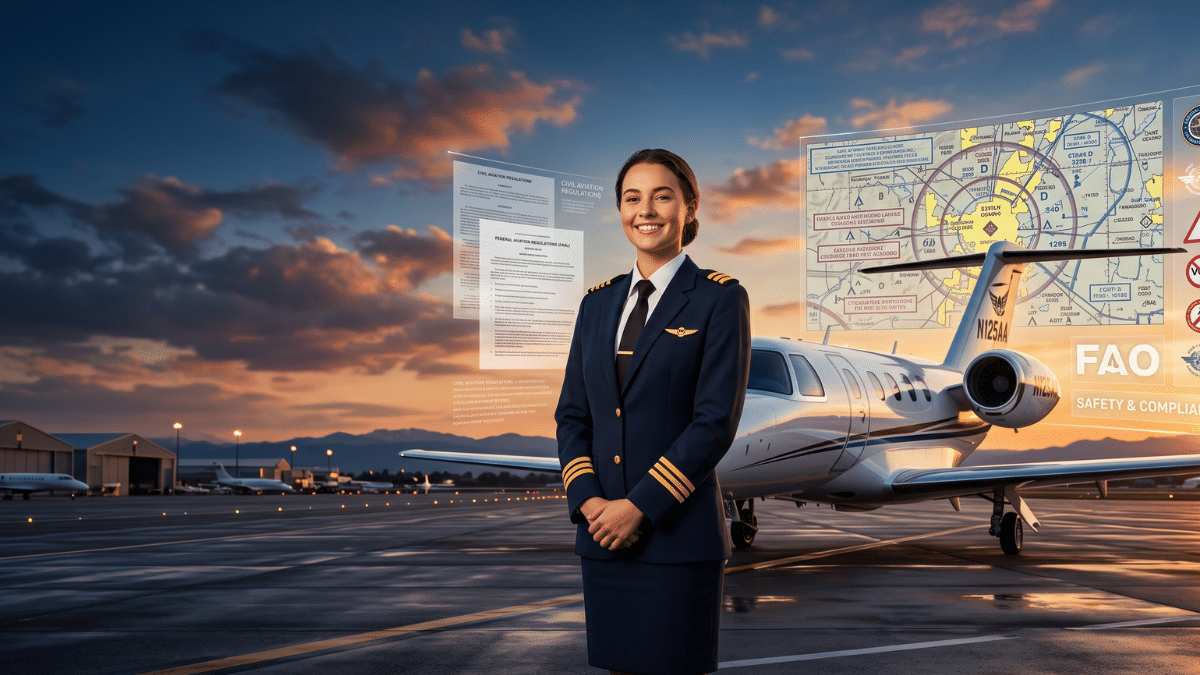

Airline careers are highly competitive. Hundreds of students apply for pilot training and air jobs every year. Airlines select candidates who are suitable for them through the Airline Entrance exams. These tests measure both technical ability, mental habits, personality, and possible decision-making.
The exam consists of written tests of subjects including Air Regulations, Meteorology, Air Navigation, Technical General, Technical Specific, and Radio Telephony. The most crucial phases are aptitude tests and psychometric evaluations. You need to know what they do if you want to become a pilot.
Importance of Aptitude Tests in Airline Entrance Exams
Airline Entrance Exams include vital aptitude tests. They aid airlines in assessing mental sharpness, quick thinking, and attention to detail. Pilots have to make quick decisions amid stressful situations. Aptitude tests simulate such challenges in a controlled environment.
Logical reasoning, Quantitative ability, and General Knowledge are some of the topics in aptitude tests. Good candidates can display analytical ability, accuracy, and flexibility of mind – all skills which are obviously essential for working in aviation.
Stages of Aptitude Tests in Airline Entrance Exams
ADAPT Test
ADAPT is a computer-based assessment used by many airlines. It checks numerical ability, logical reasoning, multitasking, hand-eye coordination, and basic aviation-related thinking. The goal is to assess how well a candidate can process information under time pressure.
CUTE Test
CUT-E focuses on cognitive skills and coordination. It measures reaction time, memory, spatial awareness, and the ability to manage multiple tasks at once. This stage reflects how a pilot may handle workload in a real cockpit environment.
Group Discussion (GD)
In the group discussion, communication skills, teamwork, leadership, and listening potential are analyzed. Candidates are given a topic and required to debate it in a group. Airlines witness how articulate you are at communicating ideas, how well you can respect someone else’s view, and discuss a topic in a balanced manner.
Psychometric Assessment
This stage evaluates personality traits, decision-making style, emotional control, and stress handling. There are no right or wrong answers. This test is performed by airlines to determine if the mindset of the candidate fits with that of the duties performed by a commercial pilot.
Personal Interview
The interview is the final and most personal stage. It is usually conducted by 7-8 interviewers. It covers motivation, career clarity, attitude, and basic technical understanding. Interviewers assess confidence, honesty, and professionalism, along with how well the candidate fits the airline’s culture.
Role of Psychometric Tests in Airline Selection
Psychometric assessments provide insight into a candidate’s personality and behavior. While aptitude tests focus on what you can do, psychometric tests reveal how you behave in various situations.
For airline recruiters, psychometric tests are essential. Pilots can experience long hours, unpredictable schedules, and unusual scenarios. Airlines want someone who is cool under pressure, who can communicate well and work effectively with co-pilots and crew members. These tests are used to screen candidates matching the temperament for a career in aviation.
How These Tests Affect Airline Entrance Exam Results?
Airline Entrance Exams are comprehensive. Scoring high in written technical exams does not ensure selection. Applicants also require good aptitude and psychometric scores. Poor performance in these tests can eliminate even academically excellent students.
Aptitude and psychometric tests cover not only the technical aspect, but also mental preparedness and personality.
Preparing for Aptitude Tests
Students must solve problems in reasoning, numeracy, and spatial skills. Time management is critical, as about half of the aptitude sections are timed.
Mock tests prove to be very helpful, and so do the sample papers. They accustom students to the formats and levels of difficulty of questions. It can help you develop your speed and accuracy, as well as boost confidence when confronted with Airline Entrance Exams.
Preparing for Psychometric Tests
Preparation for psychometric tests is different. These tests do not have right or wrong answers in the traditional sense. They measure personality traits consistently.
Candidates should focus on self-awareness and honesty. Understanding your own strengths, weaknesses, and stress responses helps in answering such assessments genuinely. Overthinking or trying to “game” the test can backfire, as inconsistencies are easily detected.
Common Challenges Students Face
Many aspirants underestimate the importance of these tests. Some focus only on technical knowledge for Airline Entrance exams. Others get nervous during psychometric assessments and answer inconsistently.
Stress management and mental conditioning are critical. Candidates who practice regularly, simulate exam conditions, and seek guidance perform better. Training programs that combine technical knowledge with aptitude and psychometric preparation are highly valuable.
Why Airlines Use These Tests?
Airline operations are complex. A pilot’s role is not only to fly but also to ensure passenger safety, manage emergencies, and coordinate with multiple teams. Aptitude and psychometric tests provide a holistic view of a candidate’s suitability.
If Airline Entrance Exams incorporate these evaluations, airlines can minimize the risk of hiring people who will not perform well in high-pressure situations. These examinations serve as a supplement to the technical tests for developing a well-rounded pilot.
Get Airline-Ready with Pilots Academy
Pilots Academy offers comprehensive training for Airline Entrance Exams. They train students on how to answer aptitude, reasoning, and question paper solving. Psychometric test training will be included to develop self-reflection and coping skills.
With highly experienced instructors and a hands-on approach, we prepare candidates to perform well in technical exams, aptitude tests, and psychometric evaluations. It inspires students so they gain confidence, understanding, and professional aircrew preparation – a great asset to have up your sleeve in this highly competitive career sector!