

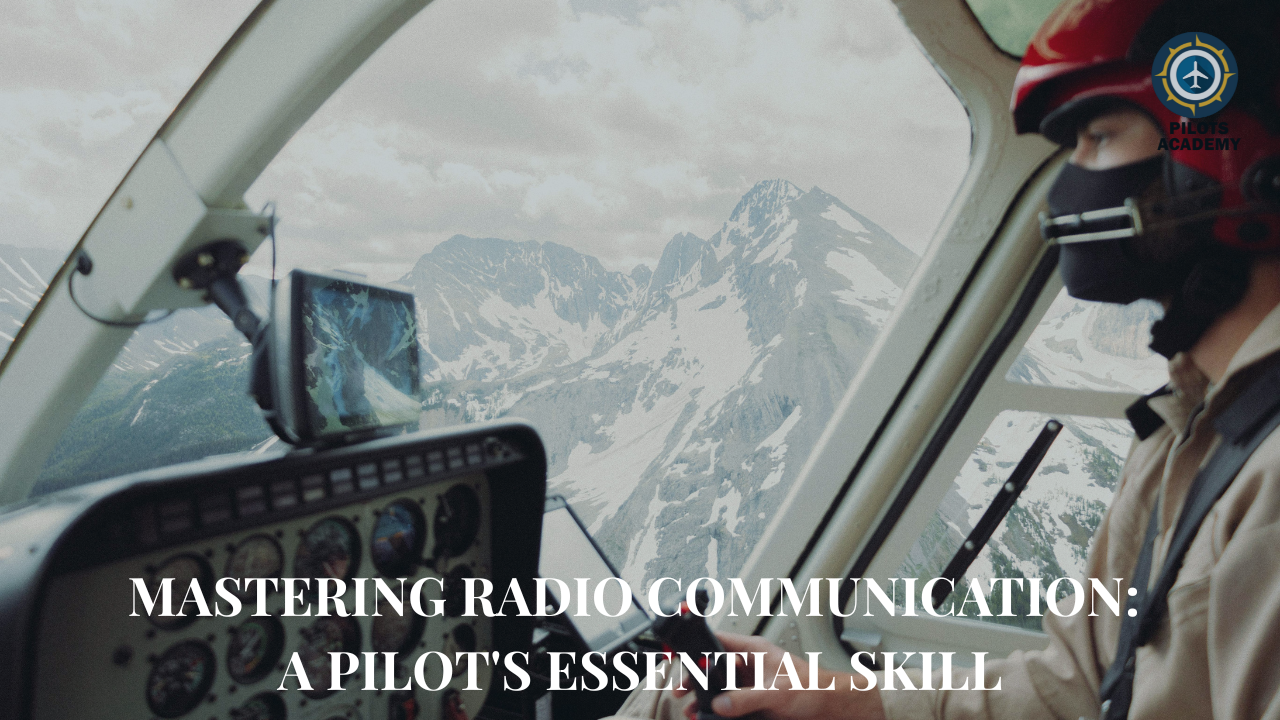
Picture this: You’re cleared for takeoff on your first solo flight, and suddenly your mind goes blank when the tower controller rattles off instructions. Your heart races, your palms sweat, and you fumble for the push-to-talk button. Sound familiar? You’re not alone. Studies show that nearly 70% of student pilots cite pilot radio communication as their biggest source of anxiety during flight training, even more than their first solo or checkride nerves.
Here’s the truth: mastering aviation radio procedures isn’t about having a smooth voice or being naturally outgoing. It’s about understanding structure, practicing consistently, and building confidence through repetition. Whether you’re just starting ground school or preparing for your first flight, this guide will help you transform from a tongue-tied beginner into a confident communicator who sounds like you’ve been flying for years. Let’s break down everything you need to know about this essential skill that connects you to the entire aviation system.
Why Pilot Radio Communication Is Your Safety Lifeline
When we talk about aviation communication skills, we’re not just discussing a box to check on your training syllabus. Effective pilot radio communication is fundamentally a safety tool that prevents runway incursions, traffic conflicts, and airspace violations. Every time you key that mic, you’re contributing to a system that keeps thousands of aircraft safely separated across the sky.
Think about it: air traffic controllers manage multiple aircraft simultaneously, often in complex airspace where timing matters. A garbled transmission or unclear position report can create confusion that ripples through the entire system. Conversely, crisp and precise radio calls reduce everyone’s workload and enhance situational awareness for pilots and controllers alike.
Many student pilots worry they’re “not good at public speaking,” but here’s the good news: aviation radio procedures are highly structured. You’re not giving a speech or making small talk. You’re following established patterns that, once learned, become second nature. The phraseology exists specifically to remove ambiguity and create predictability in communications.
The Building Blocks: Essential Aviation Radio Terminology
Before you can speak confidently on frequency, you need to understand the language. The phonetic alphabet is your foundation. November isn’t just a month anymore, it’s part of your aircraft identification. When you say “November 12345,” controllers immediately know you’re talking about a U.S.-registered aircraft.
Numbers get special treatment too. Altitudes, headings, and frequencies all follow specific pronunciation rules. You’ll say “one zero thousand” for 10,000 feet, not “ten thousand.” Runway 27 becomes “two seven,” and frequency 120.9 is “one two zero point niner.” These conventions exist because they’re clearer over sometimes-scratchy radios, especially in noisy cockpits.
Standard phraseology includes critical terms like “Roger” (I received your transmission), “Wilco” (I will comply), “Affirm” (yes), “Negative” (no), and “Say again” (please repeat). Plain language has its place too, particularly when clarifying complex situations, but the structured terminology should be your default.
Every proper radio call follows a simple formula: who you’re calling, who you are, where you are, and what you want. “Riverside Tower, Cessna 738Mike, left downwind runway 16, full stop.” Simple, clear, and complete.
Understanding ATC Communication Flow and Radio Procedures
Effective pilot radio communication follows a rhythm: listen, think, key, speak. Too many students skip straight to “key and speak,” which leads to stammering and incomplete transmissions. Before touching that push-to-talk button, listen to the frequency to understand the flow and avoid stepping on someone else’s transmission.
Understanding who to talk to matters enormously. Ground control handles taxi clearances. Tower manages takeoffs and landings. Departure and approach control the airspace beyond the airport environment. Mixing these up creates confusion and delays.
Always get the current weather before making initial contact. Listening to ATIS or AWOS gives you critical information and shows controllers you’ve done your homework. When you call ground with “Information Charlie,” they know you’re prepared and current.
Readbacks are non-negotiable for certain items: runway assignments, hold short instructions, altitude assignments, and heading or speed restrictions. Other communications just need a simple acknowledgment with your call sign. Knowing the difference comes with practice and attention.
Frequency congestion is real, especially at busy airports. Learning when to wait for a gap and when to call takes experience. If someone’s in the middle of receiving taxi instructions, wait. If there’s a brief pause, jump in. Controllers appreciate pilots who read the room, so to speak.
Crafting Your First Radio Calls: Step-by-Step
Let’s walk through a typical flight from a towered airport. After getting ATIS, your first call to ground might sound like: “Nashville Ground, Cessna 172 November 738Mike at the ramp with Information Delta, VFR to the north, request taxi.”
Ground responds with: “Cessna 738Mike, Nashville Ground, taxi to runway 2 Left via Alpha, hold short of runway 2 Right.”
You read back the critical parts: “Taxi to 2 Left via Alpha, hold short of 2 Right, Cessna 738Mike.”
See the pattern? You included who you are, where you are, what you have (the weather), and what you want. Ground gave you instructions. You confirmed the safety-critical items. This same structure applies whether you’re at a massive international airport or making position reports at an uncontrolled field.
For non-towered airports, you’ll announce your position and intentions on the common traffic advisory frequency: “Podunk traffic, Cessna 738Mike, 10 miles south, inbound for landing, Podunk.” As you enter the pattern, update your position: “Podunk traffic, Cessna 738Mike, entering left downwind runway 18, Podunk.”
Overcoming Radio Communication Anxiety: Practical Tips
Here’s something instructors wish more students knew: even pilots with thousands of hours occasionally stumble on the radio. Microphone fright is completely normal and fades with exposure.
Pre-flight preparation makes a massive difference. Write out your anticipated calls on a knee board before you fly. Having a script reduces cognitive load when you’re already managing aircraft control, navigation, and traffic scanning. Chair flying at home, complete with radio work, builds muscle memory before you’re actually airborne.
LiveATC.net is an incredible free resource. Listen to real ATC communications from airports you’ll be flying to. You’ll start recognizing patterns, common phrases, and the rhythm of various facilities. Some are fast-paced and clipped, others more relaxed. This familiarity breeds confidence.
When you do make a mistake on frequency and we all do just take a breath and try again. Controllers are professionals who work with student pilots daily. A simple “Cessna 738Mike, correction…” followed by your corrected transmission is perfectly acceptable. Nobody expects perfection; they expect clarity and safety.
Advanced Aviation Communication Skills for Growing Pilots
As you progress in training, you’ll encounter busier airspace where communication becomes more abbreviated. In Class Bravo or Charlie airspace, exchanges happen rapidly. Controllers might say “Cessna 8Mike, left traffic approved, report base.” That’s your cue to acknowledge concisely: “Left traffic, wilco, 8Mike.”
Unexpected instructions happen. Maybe you’re cleared to an intersection instead of full length, or given an altitude restriction you didn’t anticipate. Stay calm, copy the instruction, read it back, and then figure out the details. If something doesn’t make sense or seems unsafe, speak up. “Unable” is a perfectly valid word in pilot radio communication.
Lost communication procedures are important to know even though you’ll hopefully never need them. If your radio fails in controlled airspace, you’ll squawk 7600 and watch for light gun signals from the tower. Know these procedures cold; they’re part of being a complete pilot.
Multi-tasking is the hidden challenge of radio work. You need to fly the airplane first, always. Trim the aircraft so it’s hands-off stable, then make your radio call. Never let communication distract you from basic aircraft control and collision avoidance.
Common Pilot Radio Communication Mistakes and How to Fix Them
Speaking too fast is surprisingly common among nervous students trying to sound professional. The result? Controllers asking you to say again, which defeats the purpose. Slow down. Clear beats fast every single time.
Forgetting your call sign is another frequent error, especially when responding to instructions. Always include it in your readback: “Cleared to land runway 9, Cessna 738Mike.” This confirms you’re the aircraft being addressed and prevents confusion on busy frequencies.
Non-standard phraseology might sound friendly, but it creates ambiguity. Saying “with you” when checking in with a new controller is unnecessary and marks you as inexperienced. Simply state your altitude or current clearance: “Approach, Cessna 738Mike, level 4,500.”
Keying the mic while you’re still thinking creates dead air that blocks the frequency. Get your thoughts organized first, then press and speak. If you need time to process an instruction, just say “Stand by, (call sign).” Controllers respect pilots who take a moment to get it right.
Tools and Resources for Improving Your Radio Skills
Flight simulators with ATC interaction offer fantastic practice without burning fuel. Networks like PilotEdge and VATSIM provide live controllers and realistic scenarios. You can practice complex clearances, busy airspace, and emergency communications in a zero-risk environment.
Mobile apps like PlaneEnglish and ATC Radio Simulator let you practice during downtime. These tools help you recognize phraseology patterns and improve your ear for aviation radio procedures. Consistency builds competence.
Recording your actual flights (when permitted) and reviewing your radio work reveals patterns you might not notice in the moment. Were you speaking clearly? Did you step on transmissions? This self-analysis accelerates improvement.
Your flight instructor is your best resource for tailored radio practice. Ask them to role-play different scenarios on the ground. Practice requesting flight following, handling amended clearances, or reporting in-flight emergencies. This focused training builds confidence faster than learning solely through actual flights.
Study guides and quick reference cards are lifesavers, especially early in training. Keep a laminated card with common phraseology, phonetic alphabet, and frequency ranges in your flight bag. Quick references reduce stress when you’re trying to remember what to say.
Your Journey to Radio Confidence Starts Here
Mastering pilot radio communication isn’t about having a naturally smooth voice or being an extrovert. It’s about understanding the structure, practicing consistently, and giving yourself permission to learn at your own pace. Every professional pilot you hear making those crisp, effortless-sounding radio calls was once exactly where you are now: a little nervous, a lot excited, and working to build confidence one transmission at a time.
At Pilots Academy, we understand that communication training is just as important as stick-and-rudder skills. Our experienced instructors provide focused radio practice from your very first lesson, creating a supportive environment where questions are encouraged and mistakes are learning opportunities. We use proven techniques like chair flying, role-playing scenarios, and progressive exposure to busier airspace as your skills develop.
The sky is calling, and now you know how to answer back. Whether you’re just starting to explore flight training or you’re actively working through ground school, remember that every expert was once a beginner. Your future as a confident, competent pilot starts with small steps: learning the phraseology, practicing the patterns, and building experience one flight at a time. We’re here to support you through every transmission, from your first nervous call to ground control to the day you confidently navigate complex airspace as a certificated pilot. Ready to start your journey? Explore our comprehensive pilot training programs and discover how Pilots Academy can help you achieve your aviation dreams with the skills, knowledge, and confidence you need to succeed.Retry.
Frequently Asked Questions About Pilot Radio Communication
What should I say for my first radio call ever?
Start with ground control at a towered airport after you’ve listened to ATIS. Keep it simple: “(Airport name) Ground, (your aircraft type and tail number), at (location) with Information (ATIS letter), (flight type) to (direction or destination), request taxi.” Your instructor will help you practice this before your first flight, so you’ll be prepared.
How do I talk on the radio at an uncontrolled airport?
Use the common traffic advisory frequency (CTAF) listed on your chart. Announce your position and intentions clearly: “(Airport name) traffic, (your aircraft and tail number), (your location), inbound/departing runway (number), (airport name).” Update your position at key points: entering downwind, turning base, turning final, and after clearing the runway.
What happens if I mess up and say something wrong on the radio?
Nothing dramatic happens. Controllers work with student pilots constantly and expect occasional mistakes. If you realize your error, simply say your call sign followed by “correction” and then give the right information. If the controller didn’t understand you, they’ll ask you to “say again.” Take a breath and repeat more slowly.
Do I need to sound like a professional pilot right away?
Absolutely not. Clear communication matters more than sounding polished. Controllers prefer a slower, clear transmission from a student over a fast, garbled one from someone trying to sound experienced. Your confidence will grow naturally as you practice. Focus on being understood, not on sounding cool.
Can I ask ATC to repeat something or slow down?
Yes, without question. If you didn’t catch an instruction or clearance, immediately say “(your call sign), say again” or “(your call sign), say again slowly.” Controllers would rather repeat something than have you act on incorrect information. This is professional behavior, not a sign of incompetence.
What if the frequency is really busy and I can’t find a gap to call in?
Wait for a natural break in communications, usually after a controller finishes giving instructions and gets a readback. If it’s extremely congested, be patient for 10-15 seconds. Controllers are aware of who’s waiting and will often ask “Aircraft calling, stand by” to acknowledge you. Never step on someone else’s transmission.
How can I practice radio calls without actually flying?
Listen to LiveATC.net for real-world examples from airports you’ll be using. Practice chair flying at home, including all your radio calls out loud. Use flight simulator networks like PilotEdge or VATSIM for interactive practice with real people playing controllers. Write out scripts for common scenarios and rehearse them until they feel natural.