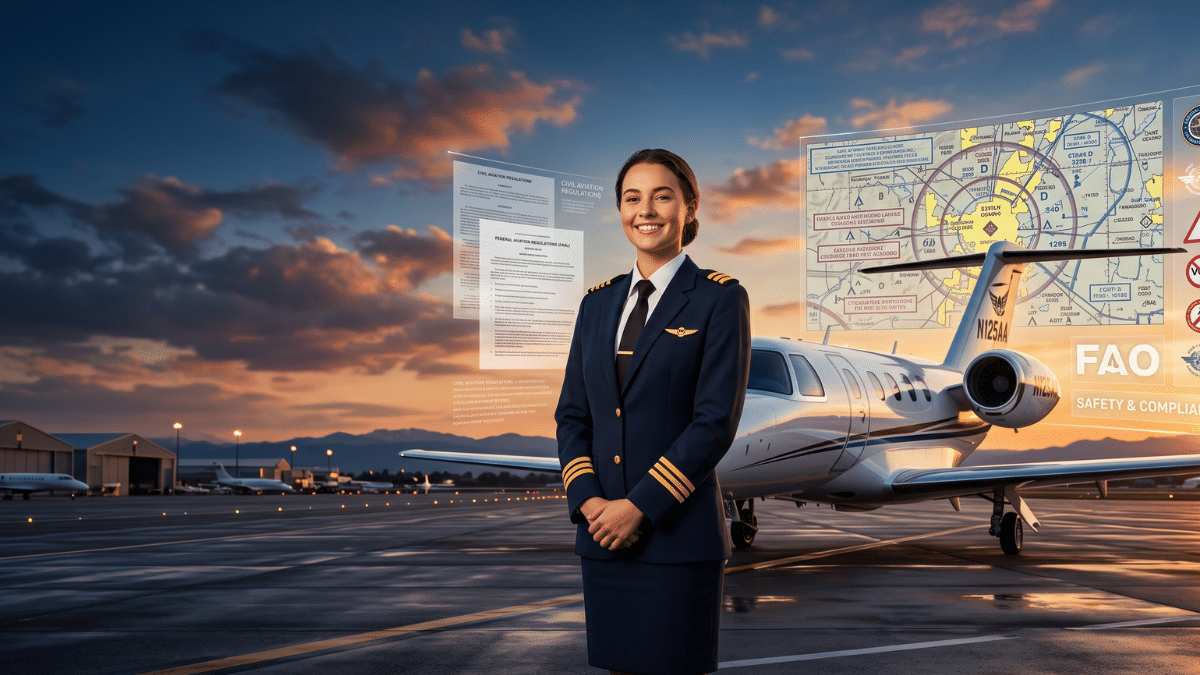
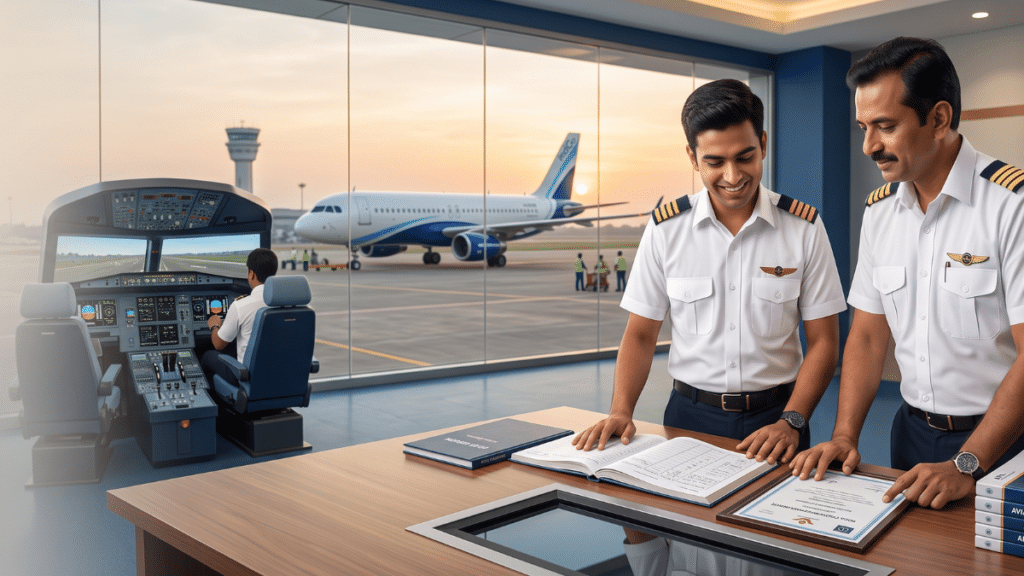
When becoming a professional pilot, it’s not only about learning how to fly an airplane; it’s also about obtaining the right license from the right authority. A commercial pilot course that is recognized by the DGCA meets regulatory certification requirements for commercial pilots and guarantees compliance with international and national civil aviation requirements. If you want to be a commercial airline pilot, getting your commercial pilot’s license through a DGCA-accredited training program is the best way of ensuring that you can fulfil your career aspirations.
What Makes a DGCA-Approved Commercial Pilot Course Different?
The Directorate General of Civil Aviation (DGCA) has established specific requirements that must be met prior to obtaining a pilot’s license in India. An accredited program by the DGCA will have its ground subjects, flight simulator hours and actual flight hours in compliance with this legislation.
The major difference between an accredited program by the DGCA is that many components of the program will not receive approval by the DGCA; i.e., your ground school, flight simulator and flight hours will not satisfy or meet all of the required legal requirements set by the DGCA.
Without approval from the DGCA, you may encounter delays and other issues in getting your pilot’s license, and/or may have to retest in order to obtain your pilot’s license. A structured commercial pilot course provided by the DGCA will allow you to secure your commitment, finances and career.
Strong Foundation Through Structured Training
The first step in a quality program is ground training. Studying aircraft systems, regulations, meteorology, navigation, and human factors develops your understanding of how an aircraft operates.
Next there is simulator training which gives you the opportunity to practice handling an emergency, flying the instruments and judgment in a controlled setting. This is another confidence boosting step before flying.
Finally, you have actual flight training where you learn how to take off, land, navigate cross-country, fly at night, and do advanced manoeuvres. Every hour of flight training counts towards your license.
CPL training provides a balanced approach to each of these steps, and all training is supervised by qualified flight instructors.
Step-by-Step Licensing Path
The DGCA-approved route does not end with basic flight training.
You will first receive a Private Pilot License (PPL). Once you have enough hours, you will get an instrument rating and a multi-engine rating. These ratings will give you more job opportunities.
Once you have finished these steps, you are ready to apply for your Commercial Pilot License (CPL) through the DGCA. An appropriate place to obtain your CPL will assist you in completing all necessary forms, documentation, and compliance.
Organized CPL training will ensure that no component is missed during the training time, while also ensuring compliance with DGCA regulations from day one.
Better Career Opportunities After Certification
Certified pilots are in higher demand by airlines than pilots who are not certified. Completing a pilot training program that is recognized by an airline, it demonstrates a level of compliance, discipline, and standardized development of skills. When you have received your pilot’s license, you have opened many opportunities, including:
- Commercial Pilot.
- Charter Pilot.
- Corporate Jet Pilots.
- Flight Instructors.
Commercial pilot courses must be certified. Having the proper training provides employers with confidence that pilots are capable of adhering to the safety protocols defined by airline operating procedures.
Global Exposure and Advanced Skill Development
If you receive pilot training from a DGCA-approved program, you will likely gain exposure to flying in different parts of the world. Flying in different areas of the world, as you complete your training, allows you to become more adaptable to the ever-changing requirements within the aviation industry.
Advanced simulator use helps to increase decision-making skills as well as the ability to fly multi-engine aircraft in your commercial pilot training. Instrument certification allows commercial pilots to operate an aircraft with little or no visibility.
The aviation industry expects pilots to possess all of the listed skills.
Final Thoughts
Your career in aviation should begin with the right pilot training program. Pilots Academy’s DGCA-approved commercial pilot course provides you with the assurance that your commercial pilot’s licence is valid, your skills meet aviation industry standards, and you will have a clear career direction.
Aviation is a very serious profession, and throughout the aviation industry, safety, compliance, and discipline matter. Make sure that your training provider is a recognized airline training provider, that you obtain the proper training for the career path that you want to follow, and that you are ready to fly with confidence and credibility into the future. Visit our website to learn more about our course.